Triple Klondike
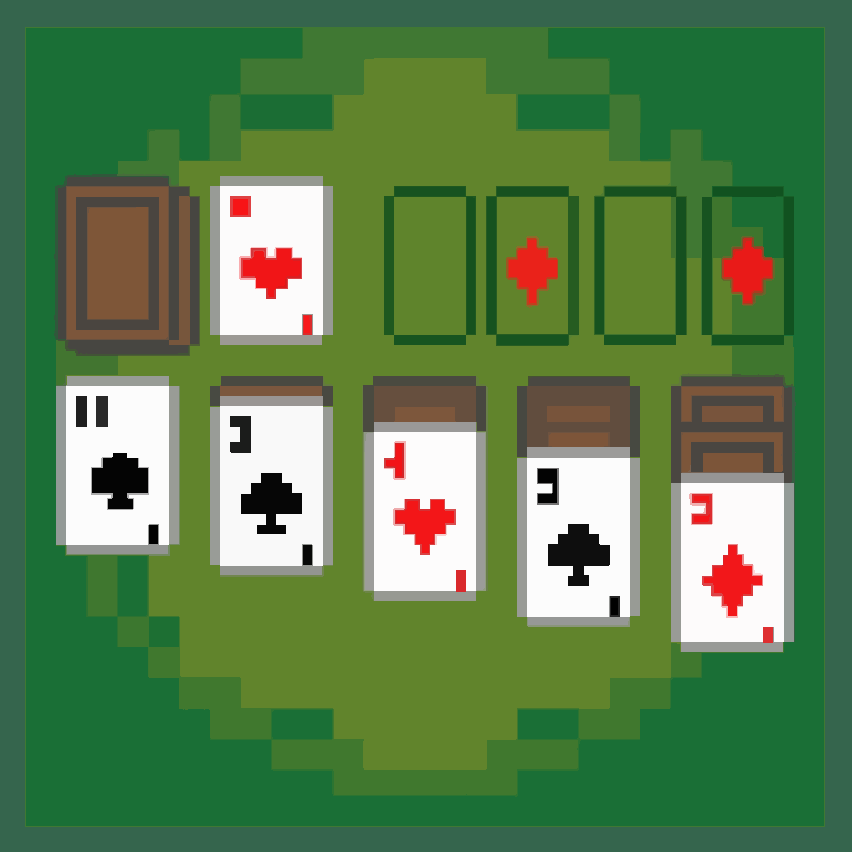
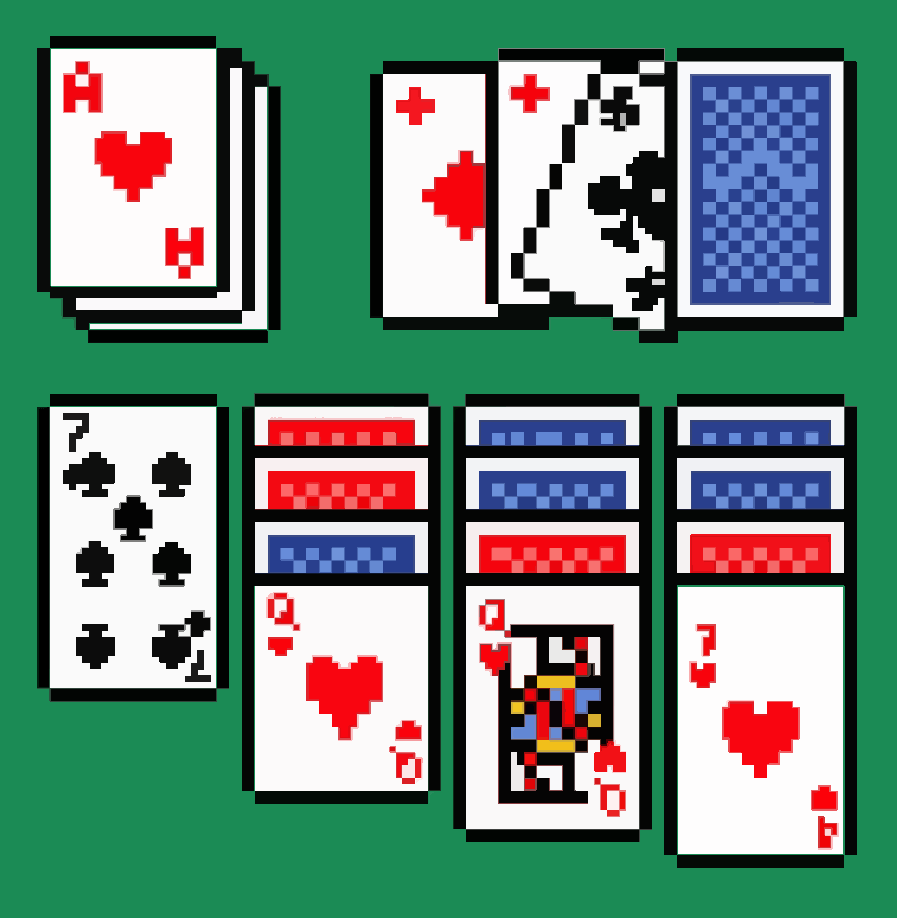
Three decks, 156 cards, thirteen columns and twelve foundations, played by ordinary Klondike rules. The extra decks make it kinder rather than harder, with roughly 98% of deals winnable. Free to play with no download. Pick it when you want a long session that ends well.
How to Play Triple Klondike
Game info
- Decks: 3 (156 cards)
- Difficulty: Easy (Turn 1) / Medium (Turn 3)
- Game time: Long
- Win rate: ~98%
- Type: Skill/Luck
Objective
Move all 156 cards to the 12 foundation piles.
The game
Foundations
- 12 foundations across the top (3 per suit)
- Build up in suit from Ace to King
- Top cards can be moved back to the tableau
Tableau
- 13 columns of cards
- Build down in alternating colors (red on black, black on red)
- Move single cards or properly sequenced groups
- Only Kings (or groups led by a King) can fill empty columns
Stock & Waste
- Stock in upper left, waste pile beside it
- Draw 1 or 3 cards at a time (depending on variant)
- Unlimited redeals - waste automatically recycles to stock
- Only the top waste card is playable
Variants
Turn 1
Draw one card at a time. Very high win rate with minimal planning needed. Great for a relaxing session.
Turn 3
Draw three cards, play only the top one. Requires more patience and careful sequencing, but still very winnable for experienced players.
Tips and Strategy
- With three of every card in play, you can afford to send cards to the foundations earlier than in single deck Klondike. Another 7 of hearts is usually on its way.
- Thirteen columns is a lot of board. Work systematically from one side rather than jumping around, or you will miss available moves simply by not looking.
- Empty columns still take Kings only, and with twelve Kings in the deck you will rarely be short of one. Clear columns more freely than you would in Klondike.
- On Turn 3, the stock recycles without limit, so treat a bad pass as information rather than a setback and change the order you play cards before cycling again.
About Triple Klondike
Multi-deck Klondike variants exist for a simple reason: redundancy makes the game kinder. In a single deck, one buried card can end a deal because there is no other copy of it. With three decks, most cards you need have two backups somewhere in the layout, and the failure modes that make Klondike frustrating largely disappear.
Long, not difficult
The trade is time. A completed Triple Klondike game means placing 156 cards on twelve foundations, and even a smooth win takes a while. That makes it a different experience from the classic. You are not testing whether you can win, you are working steadily through a very large board. Turn 1 is close to a guaranteed win with attention, and Turn 3 adds enough friction to keep it interesting.
Frequently Asked Questions
How many decks does Triple Klondike use?
Three, for 156 cards in total. They are dealt into thirteen tableau columns, and there are twelve foundations, three for each suit, each built from Ace to King.
Is Triple Klondike harder than regular Klondike?
No, it is considerably easier. Around 98% of deals are winnable because three copies of every card means a buried card rarely ends the game. It takes much longer to play, though.
What is the difference between Turn 1 and Turn 3 here?
Turn 1 flips one stock card at a time and is close to a guaranteed win with careful play. Turn 3 flips three and lets you play only the top one, adding planning without seriously threatening the outcome.
Play More Solitaire
Triple Klondike is the long game of the family. Placing 156 cards on twelve foundations takes a while even when it goes smoothly, and with around 98% of deals winnable it usually does. Less a test than a steady, absorbing sort through a very large board.
If the bigger board suits you, there is more of it:
- Klondike is the single deck original, where one buried card really can end the deal and Turn 3 drops the win rate to around 30%.
- Easthaven changes how the stock works, dealing one card onto every column at once instead of turning cards to a waste pile.
- Gold Mine inverts the setup: empty tableau, all 52 cards in stock, and one draw-three pass to build something out of them.
- Spider is the natural next multi-deck challenge, swapping foundations for eight same-suit runs assembled in the tableau itself.