Easthaven Solitaire
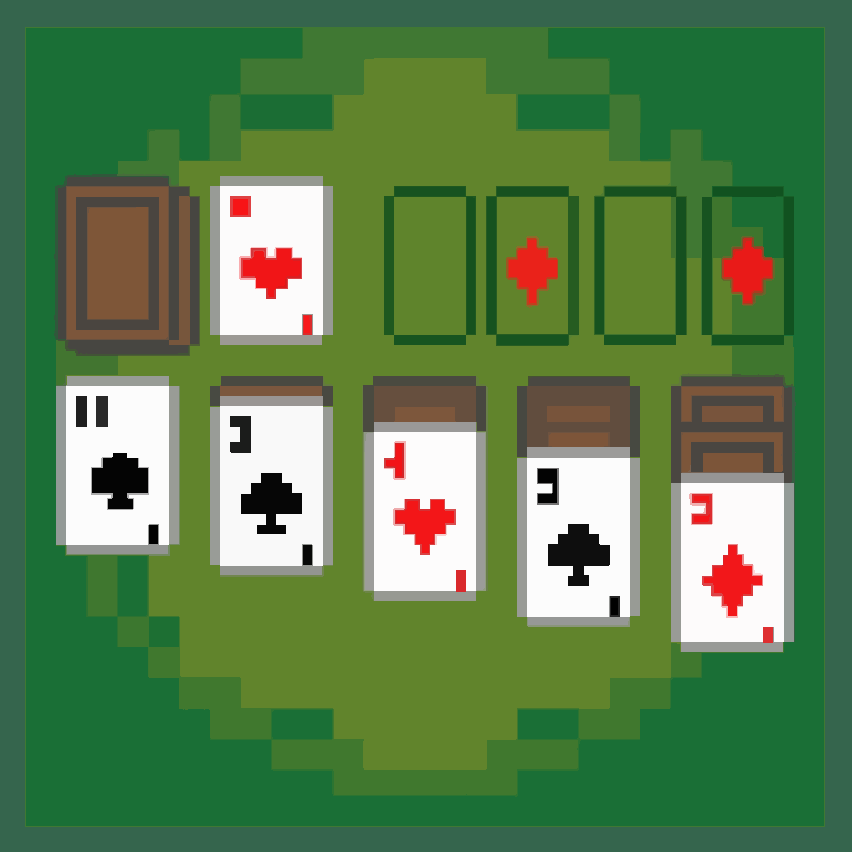
Klondike's tableau, Spider's dealing. There is no waste pile in Easthaven, so when the moves run out the stock drops one card onto every column at once. Free in your browser, no account needed. Around 75% of deals can be won, which makes it one of the kinder games in the Klondike family.
How to Play Easthaven Solitaire
Game info
- Decks: 1 (52 cards)
- Difficulty: Medium
- Game time: Medium
- Win rate: ~75%
- Type: Skill
Objective
Build all four suits Ace to King on the foundations.
The game
Foundations
- 4 piles building up by suit from Ace
Tableau
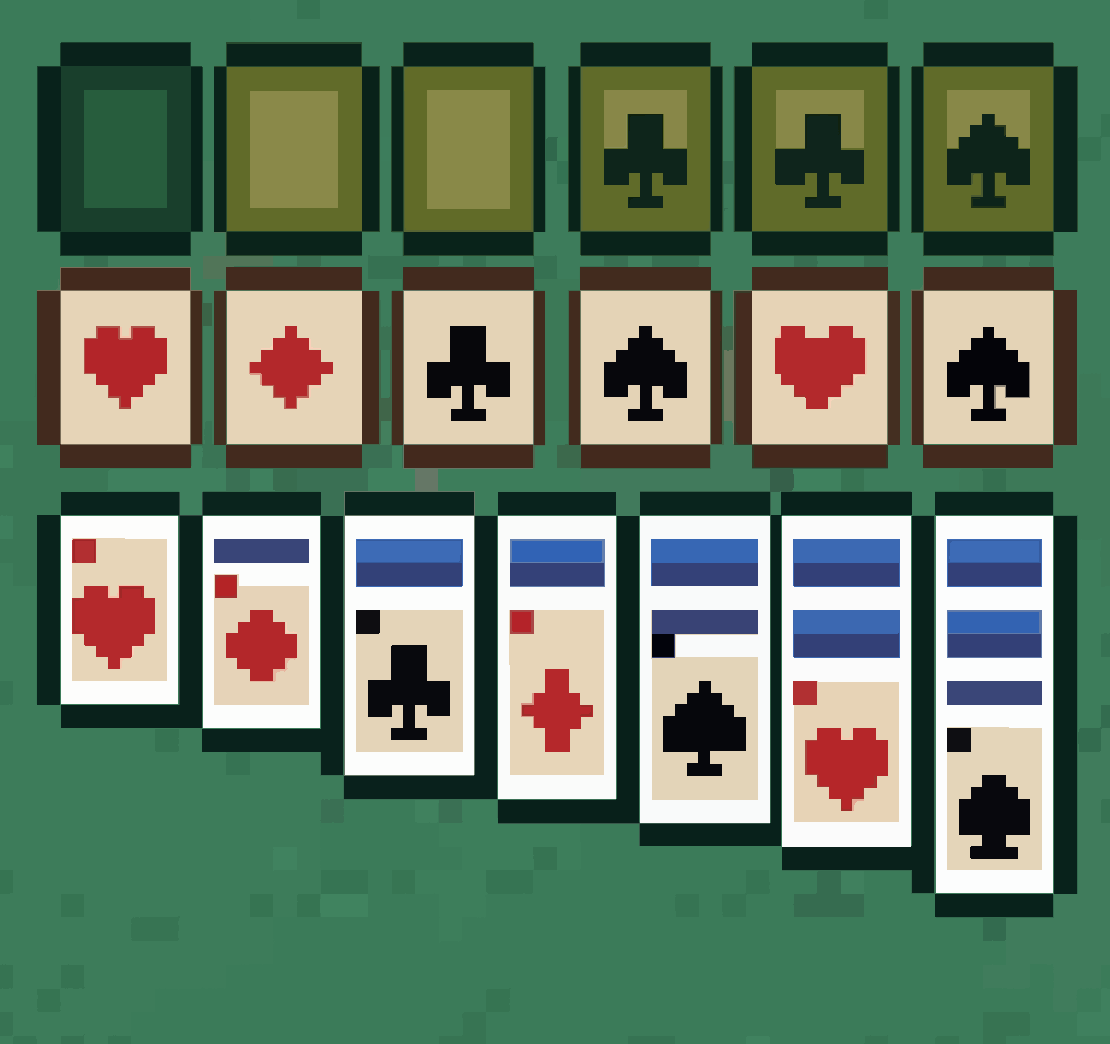
- 7 columns with 3 cards each to start
- Build down in alternating colors
- Move properly sequenced groups together
- Empty column rules depend on variant
Stock
- Deals one card to every tableau column at once
- No separate waste pile
- Cards deal face-up on top of each column
Variants
- Any Card: Empty columns accept any card (easier)
- Kings Only: Empty columns accept only Kings (harder)
Tips and Strategy
- Squeeze the board dry before every deal. Each deal buries the top of all seven columns simultaneously, so any move you left on the table is gone.
- Uncover face-down cards before dealing, not after. A hidden card under three fresh cards is much more expensive to reach.
- Empty columns are worth protecting, and unlike Spider you are not blocked from dealing while one is open. That makes them pure profit.
- Send cards to the foundations steadily. There is no cycling stock to rescue you, so shrinking the tableau is the main way to stay mobile.
About Easthaven Solitaire
Easthaven is sometimes described as Klondike crossed with Spider, and the description holds up. The tableau builds down in alternating colours onto four foundations, exactly like Klondike. The stock deals across every column at once with no waste pile, exactly like Spider.
Why the dealing rule matters
Klondike's waste pile lets you audition cards one at a time and cycle past the ones you cannot use. Easthaven gives you no such filter. When you deal, seven cards land wherever they land, and you play the board you are given. That removes most of the fishing that characterises Klondike and replaces it with a simple discipline: make every possible move before touching the stock. Players who internalise that rule win most of their games.
Frequently Asked Questions
What is the difference between Easthaven and Klondike?
The dealing. Klondike turns cards to a waste pile one or three at a time and lets you cycle through them. Easthaven has no waste pile and deals a single card onto every tableau column at once.
Is Easthaven Solitaire easy?
Reasonably. Around 75% of deals are winnable, well above Klondike, largely because there is no draw-three restriction hiding cards from you.
What do the Easthaven variants change?
Only what an empty column will accept. Both variants build the tableau down in alternating colours. Any Card lets you drop anything into a gap, while Kings Only restricts it to Kings, which makes empty columns far harder to use.
Play More Solitaire
Easthaven rewards one habit above all others: empty the board of moves before you touch the stock. Every deal buries all seven columns at once, so anything you left behind is gone. Players who internalise that win most of their games.
It sits between two families, and both are worth visiting:
- Klondike is the tableau Easthaven borrows, with a waste pile that lets you audition cards one at a time instead of taking seven at once.
- Triple Klondike scales the classic to three decks and thirteen columns, and is the most forgiving game in the whole family at around 98% winnable.
- Spider is where the dealing comes from. Two decks, ten columns, and eight same-suit runs to build from King down to Ace.
- Gold Mine starts you with nothing on the table at all, building the tableau out of a single draw-three pass through the deck.