Tri Peaks Solitaire
Tri Peaks Solitaire builds three overlapping pyramids and clears them in chains, taking any exposed card one rank above or below the top of the waste pile. Free to play in the browser with no sign-up. Long chains feel excellent, roughly 90% of deals can be won, and a good run strips a whole peak in one breath.
How to Play Tri Peaks Solitaire
Game info
- Decks: 1 (52 cards)
- Difficulty: Medium
- Game time: Medium
- Win rate: ~90%
- Type: Luck
Objective
Remove all cards from the three pyramid formations.
The game
The Peaks
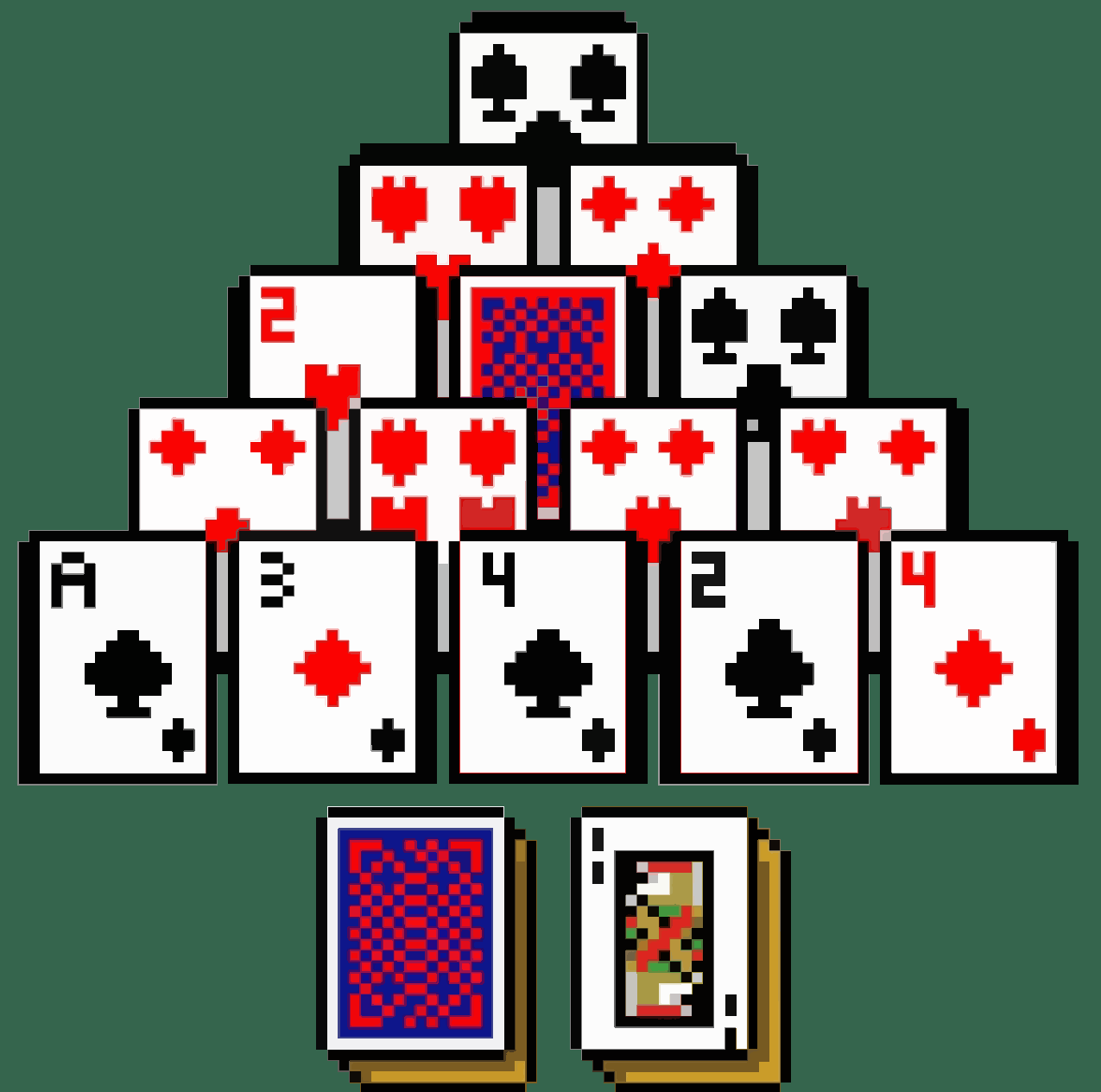
- 28 cards form three overlapping pyramids
- Cards are playable once uncovered (no cards overlapping them)
- Remove a card by clicking it if it's one rank higher or lower than the waste top
- Ranks wrap: King plays on Ace and vice versa
Stock & Waste
- 24 cards in stock
- Flip one card at a time to the waste
- Build chains by removing cards one rank up or down
Variants
- Fog: Covered cards stay face-down until revealed
- Clear Sky: All cards visible from the start
Tips and Strategy
- Lower all three peaks together. Clearing one peak completely while the others stand untouched leaves you with the three hardest cards on the board and nothing to chain them to.
- Before flipping the stock, exhaust every card the current waste top can reach. Stock cards are finite and each one you save is another chance later.
- When two cards would both play, take the one that uncovers two cards rather than one. Cards in the lower rows sit under two others, so clearing them widens the board fastest.
- Use the wrap. King plays on Ace and Ace on King, which frequently extends a chain that looked finished.
- In Fog mode, favour moves that reveal face-down cards early. Information arriving late is worth much less when the stock is nearly gone.
About Tri Peaks Solitaire
Tri Peaks was designed by Robert Hogue in 1989, which makes it one of the youngest games in the standard solitaire canon and one of the few with a known author. It combines the overlapping layout of Pyramid with the chain clearing of Golf, and the result outgrew both: it is the base game behind most of the large commercial solitaire apps on mobile.
Why the chains feel so good
Golf gives you a flat tableau, so a long chain is pleasant but visually modest. Tri Peaks stacks its cards into peaks, so a single well-chosen chain can collapse an entire structure in a cascade. That feedback loop, one card triggering a visible avalanche, is the reason the game transferred so well to touchscreens and free-to-play formats.
Fog or Clear Sky?
Fog is the traditional game: covered cards stay face down until the cards above them are removed, so you play on partial information and adapt. Clear Sky reveals everything from the start, turning the game into a planning exercise where you can trace a full route before committing. Neither is harder in a strict sense, but Clear Sky rewards patience and Fog rewards instinct.
Frequently Asked Questions
How do you play Tri Peaks Solitaire?
Remove any uncovered card from the three peaks if it is exactly one rank higher or lower than the top card of the waste pile. Ranks wrap, so Ace and King connect. When nothing plays, flip a card from the stock. Clear all 28 peak cards to win.
Is Tri Peaks Solitaire easy to win?
Comparatively yes. Around 90% of deals are winnable, which makes it one of the more forgiving solitaire games. Losses usually come from spending stock cards too freely rather than from an impossible layout.
What is the difference between Fog and Clear Sky?
In Fog, covered cards stay face down until they are uncovered, so you plan as you go. In Clear Sky every card is visible from the start, letting you map out chains in advance.
What is the difference between Tri Peaks and Pyramid?
Both use overlapping card layouts, but Pyramid clears cards in pairs adding to 13, while Tri Peaks clears them in chains one rank up or down from the waste pile. Tri Peaks is considerably easier to win.
Play More Solitaire
Tri Peaks is the most satisfying game here to get right. A well-chosen chain does not just remove a card, it collapses a whole peak in a cascade, and with around 90% of deals winnable you get to feel that often rather than occasionally.
If you want more of the same, these four sit closest:
- Six Peaks doubles everything: two decks, six peaks and a longer sitting. Two of every rank in play means the chains available are longer too.
- Golf is the same chaining rule on a flat tableau of seven columns. No peaks to collapse, but games take a couple of minutes and the pattern spotting is identical.
- Elevator puts Golf's rule on an inverted pyramid, where each card you take can uncover two more.
- Pyramid keeps the overlapping layout but pairs cards adding to 13 instead of chaining them. Much less forgiving at around 15% won, and a genuine step up.