Penguin Solitaire
Seven free cells instead of FreeCell's four, a tableau that builds by suit, and sequences that wrap so a King can be played onto an Ace. The first card dealt sets the foundation rank and shapes everything after it. Free to play, no download. Around 90% of deals fall to a careful player.
How to Play Penguin Solitaire
Game info
- Decks: 1 (52 cards)
- Difficulty: Medium
- Game time: Medium
- Win rate: ~90%
- Type: Skill
Objective
Move all 52 cards to the four foundation piles.
The game
The "Beak"
- First card dealt sets the foundation starting rank
- Other cards of this rank go directly to foundations
- This card is called the "beak"
Foundations
- 4 piles building up by suit
- Wrapping: King follows Queen, Ace follows King
Tableau
- 7 columns of face-up cards
- Build down by suit, with wrapping
- Move sequences using available cells
- Empty columns accept only the rank below the beak
Cells
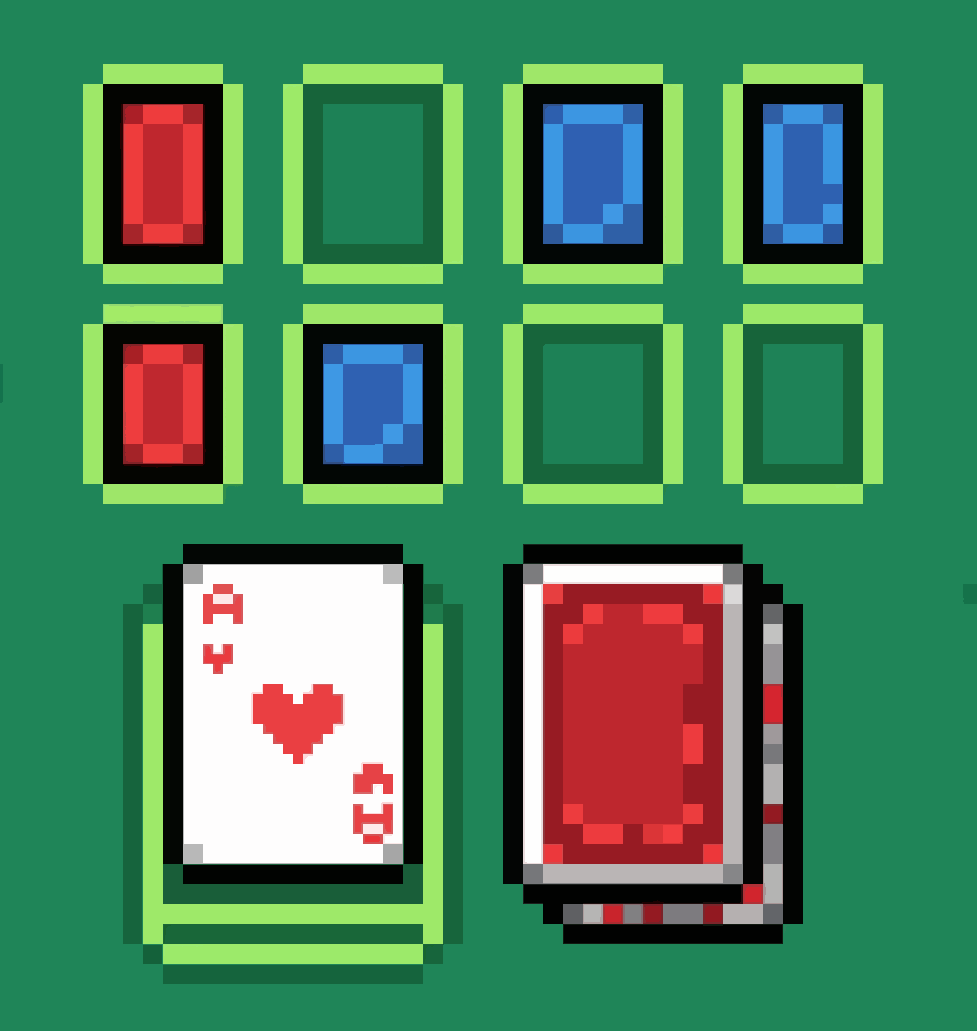
- 7 cells for temporary storage
- Each holds one card
- More open cells = larger sequences movable
Tips and Strategy
- Seven cells is a lot of rope. Use them to relocate whole sequences, but never fill the last two without a clear plan to empty them again.
- Empty columns take only the rank directly below the beak, which is stricter than FreeCell. Check that the right card is available before you clear a column.
- Wrapping means an Ace is not the end of a run. A King can be played onto an Ace, so descending sequences carry on past the bottom of the ranks.
- Get the three cards matching the beak out early. They go straight to the foundations and unblock whatever sits beneath them.
About Penguin Solitaire
Penguin was designed by David Parlett, the British games historian responsible for a number of modern solitaire variants. It takes the FreeCell framework and adjusts three things at once: more cells, same-suit building instead of alternating colours, and descending runs that wrap past Ace onto King.
The beak
The first card dealt is called the beak, and it fixes the rank that all four foundations start from. The other three cards of that rank go straight to the foundations at setup, and empty columns will only accept the rank immediately below it. That one card sets up everything after it, and separates Penguin from the FreeCell family it otherwise resembles.
Frequently Asked Questions
What is the beak in Penguin Solitaire?
The first card dealt. It sets the starting rank for all four foundations, the other three cards of that rank are placed on the foundations immediately, and empty tableau columns will only accept the rank one below it.
What is the difference between Penguin and FreeCell?
Penguin has seven cells instead of four, builds the tableau down by suit rather than in alternating colours, lets a descending run continue past Ace onto a King, and starts its foundations on a variable rank rather than always on Aces.
Is Penguin Solitaire winnable?
Usually. Around 90% of deals can be won. Every card is visible from the start, so it rewards planning in the same way FreeCell does.
Play More Solitaire
Penguin is FreeCell with three dials turned at once: seven cells instead of four, same-suit building instead of alternating colours, and sequences that wrap so no card is ever a dead end. Around 90% of deals come out.
Each of these sets the same trade differently:
- FreeCell is the four cell standard. Fewer cells, but alternating colours and any-card empty columns make it the most fluid game in the group.
- Eight Off pushes the cells to eight and restricts empty columns to Kings, landing very close to Penguin by a different route.
- Flower Garden replaces cells with a sixteen card bouquet where everything is playable at once, but nothing can ever go back in.
- Baker's Dozen gives you no reserve at all: thirteen face-up columns, single card moves, and empty columns gone for good.