Bear River
Eighteen small piles, each capped at three cards, with building allowed up or down by suit and three holes for temporary storage. Bear River has one of the stranger layouts in solitaire and wins about 60% of the time. Free to play, nothing to download.
How to Play Bear River
Game info
- Decks: 1 (52 cards)
- Difficulty: Medium
- Game time: Medium
- Win rate: ~60%
- Type: Skill
Objective
Build all four foundations to completion.
The game
Foundations
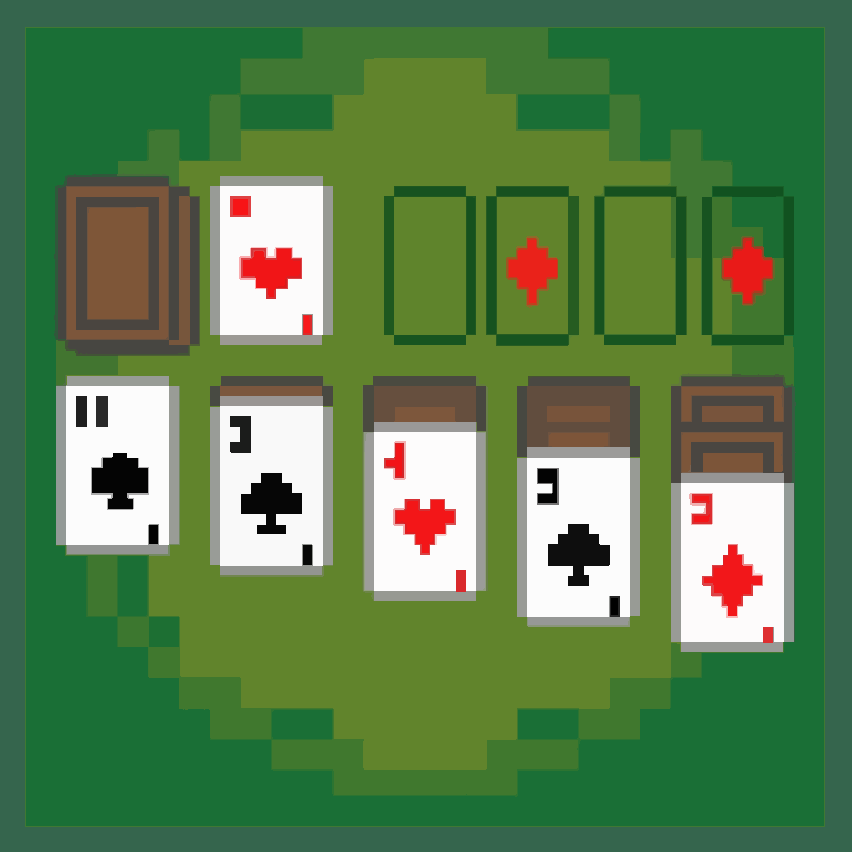
- 4 piles at the top
- Build up in suit, wrapping King to Ace
- Starting rank determined by first dealt foundation card
Tableau
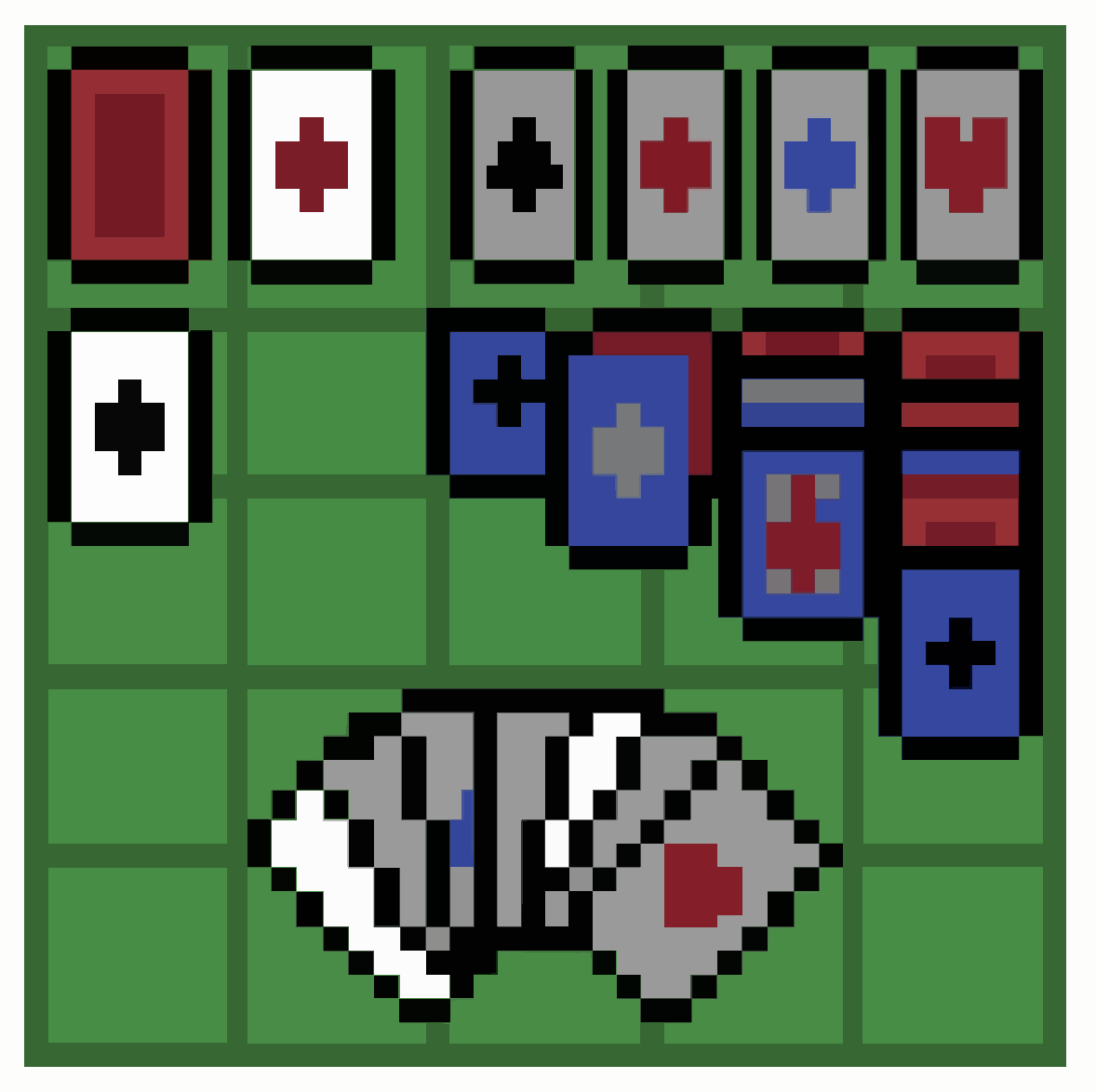
- 18 piles arranged in rows
- Each pile holds maximum 3 cards
- Build up or down by suit (bidirectional)
- Only the top card of each pile moves
Holes (Reserve)
- 3 special piles that act as temporary storage
- Accept cards when empty
- Use them to maneuver stuck cards
Tips and Strategy
- Watch pile sizes constantly. A pile that reaches three cards is sealed until you play its top card away, and stacking two of them next to each other is how boards lock up.
- Bidirectional building means every card has two possible destinations per pile, not one. Check both before deciding you are stuck.
- Keep at least one hole free. They are the only way to rescue a card trapped under something you need.
About Bear River
Bear River takes two ideas that rarely appear together. The foundations start on whatever rank the deal turns up and wrap from King back around to Ace, borrowed from Canfield. The tableau builds by suit in either direction, up or down, which almost no other solitaire game allows.
Constraint as the design
The three card pile limit is what holds it together. Without it, bidirectional building would make the game trivial, since nearly any card could go nearly anywhere. With it, every placement is a commitment of scarce space across eighteen piles, and the three holes carry real weight.
Frequently Asked Questions
How do you play Bear River Solitaire?
Build the four foundations up by suit from the rank set by the first dealt card, wrapping past King to Ace. In the tableau you may build up or down by suit, but no pile may exceed three cards, and only the top card of each pile can be moved.
What are the holes in Bear River?
Three reserve piles, dealt two cards each at the start and capped at three like every other pile. Playing them down gives you somewhere to park a card that is blocking you, which makes them the main tool for unsticking a jammed board.
Why can I not add a card to that pile?
Piles are capped at three cards. Once a pile is full, nothing more can be placed on it until its top card is played elsewhere.
Play More Solitaire
Bear River is the odd one out here, and that is the appeal. Eighteen tiny piles, building allowed in both directions, and three holes to rescue trapped cards. The three card cap is what holds it together, and around 60% of deals come out.
It shares pieces with several different families:
- Canfield uses the same variable foundation rank and wrapping, in a far tighter layout with a 12 card reserve and roughly 3% of deals winnable.
- Flower Garden is another reserve driven game, with sixteen bouquet cards playable at any moment and six flower beds to place them in.
- Montana shares the flat grid feel, sorting four rows from 2 to King by moving cards into the gaps the missing Aces leave behind.
- Klondike is the familiar alternative when you want columns, foundations and a stock again.