Forty Thieves Solitaire
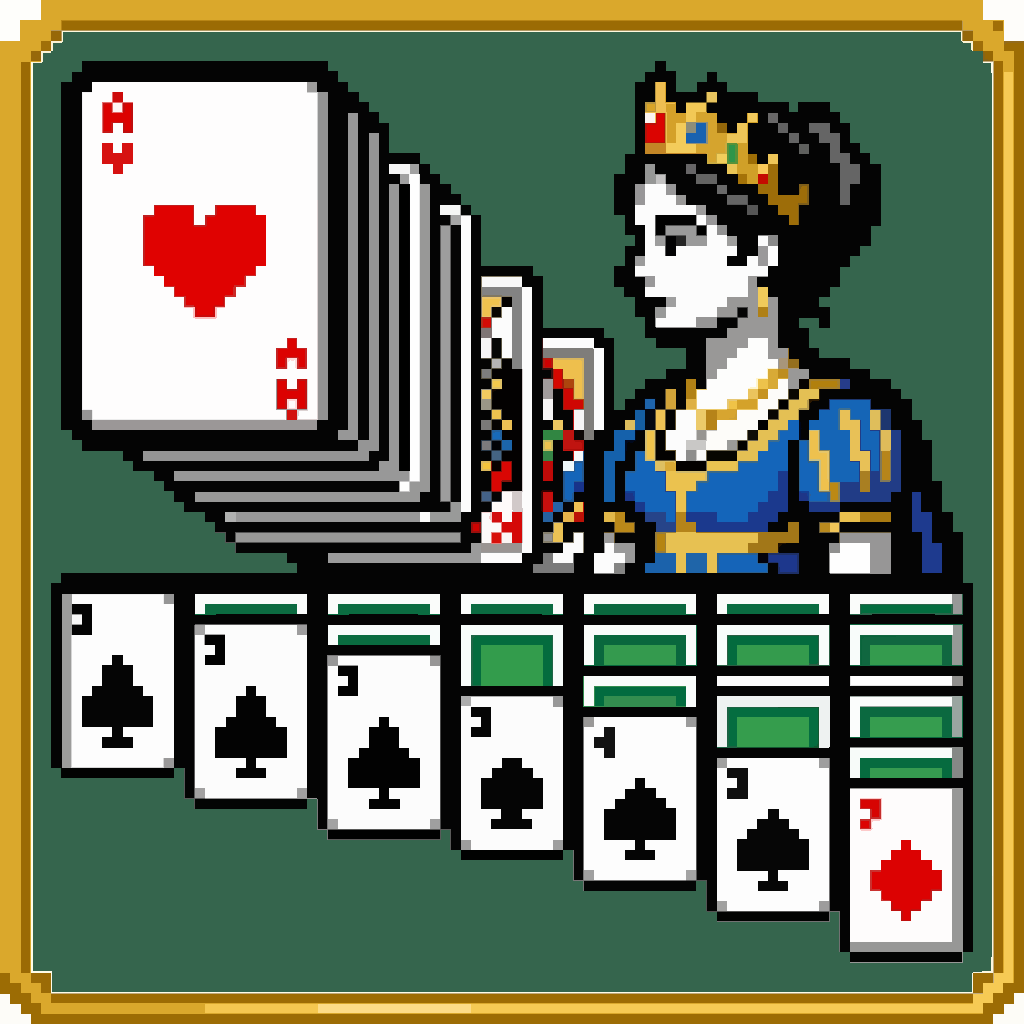
Forty Thieves Solitaire deals 40 face-up cards into ten columns, the thieves of the name, backed by two decks and eight foundations. One card moves at a time and there is no redeal. Free in the browser, nothing to install. Most people rank it among the hardest classic solitaire games, and about one deal in ten goes your way.
How to Play Forty Thieves Solitaire
Game info
- Decks: 2 (104 cards)
- Difficulty: Very Hard
- Game time: Long
- Win rate: ~10%
- Type: Skill
Objective
Build all 8 foundations from Ace to King by suit.
The game
Foundations
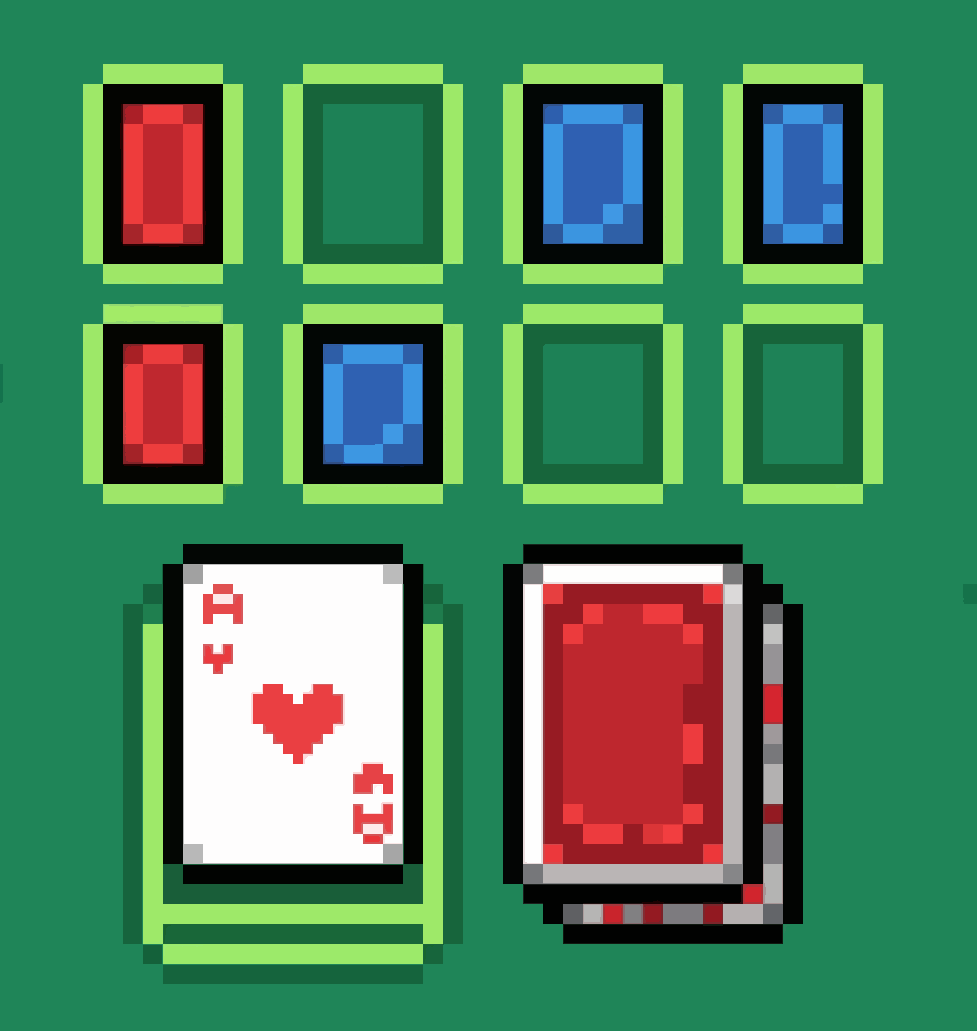
- 8 piles (two per suit)
- Build up by suit from Ace
Tableau
- 10 columns with 4 face-up cards each (40 cards total - the thieves)
- Build down by suit
- Move only one card at a time
- Any card can fill an empty column
Stock & Waste
- 64 remaining cards in stock
- Draw one card at a time to waste
- No redeals - one pass only
Tips and Strategy
- Empty a column as early as you can. With single card moves, an empty column is the only manoeuvring space in the game, and any card can fill it.
- Never spend an empty column to save one card. Treat it as a workshop you borrow and hand back, not a parking space.
- Watch for duplicate cards blocking each other. Two decks means two of every card, and a second Queen of spades buried under the first is a common quiet killer.
- Play the stock slowly. There is one pass and no redeal, so a card skipped is gone. Check every waste card against every column before drawing the next.
- Every tableau placement has to match suit, so your options are narrow by design. Before you commit a card, check that you are not burying the only landing spot for a card still in the stock.
About Forty Thieves Solitaire
Forty Thieves is also known as Napoleon at Saint Helena, from the persistent story that the exiled emperor played it during his final years on the island. The story is unverified but it stuck, and several related two deck games carry Napoleonic names as a result, including Josephine.
Why it is so hard
Three restrictions combine. You may only move one card at a time, which makes long tableau sequences almost immovable. You must build down by suit, cutting your landing options to a quarter of what alternating colours would allow. And the stock gives you a single pass with no redeal, so any card you fail to use is out of the game. Individually each is manageable. Together they push the win rate down to roughly 10%.
A game of accounting
Good Forty Thieves play looks less like card play and more like bookkeeping. You are tracking which of the eight foundations needs what, which duplicates are stranded, and how many moves an empty column can buy you. Players who enjoy it enjoy it for that, and players who want a relaxing game usually pick Josephine instead.
Frequently Asked Questions
Why is it called Forty Thieves?
The tableau is dealt as ten columns of four cards, exactly 40 cards, and those 40 are the thieves. The name nods to Ali Baba and the Forty Thieves. The game is also known as Napoleon at Saint Helena.
How hard is Forty Thieves Solitaire?
Around 10% of deals are winnable, making it one of the hardest classic solitaire games. Single card moves, same-suit building and a single pass through the stock all pull in the same direction.
What is the difference between Forty Thieves and Josephine?
Josephine uses the same layout and rules but lets you move same-suit sequences as a group instead of one card at a time. That one change lifts the win rate from roughly 10% to around 25%.
How many decks does Forty Thieves use?
Two, 104 cards. Forty are dealt to the tableau, 64 go to the stock, and there are eight foundations, two for each suit, built from Ace to King.
Play More Solitaire
Forty Thieves is for players who like the bookkeeping. You are tracking eight foundations, two of every card and a single pass through the stock, and roughly one deal in ten rewards you for it. Nobody plays this one to relax.
These four are where its players tend to go next:
- Josephine is the obvious next stop: identical layout, but same-suit sequences move as a group. That one change lifts the win rate to around 25% and makes long sequences worth building rather than worth avoiding.
- Diagonal is another two deck test, with a staircase layout and a reserve pile that lets one awkward card be set aside.
- Montana scratches the same methodical itch in a completely different shape: no piles at all, just four rows to sort by moving cards into gaps.
- Eight Off keeps the same-suit building but hands you eight reserve cells to soften it, which is about as far from Forty Thieves as same-suit games get.