- The person who plays 🏐 Volleyball is in the third house.
- The house with the 🌲 Pine tree is the third house.
- The 🟦 Blue house is the second house.
- The one who adores the 🐵 Monkey is in the second house.
- The person who plays 🏉 Rugby is directly to the left of the house shaded by the 🌳 Oak.
- The neighbor who loves the 🦁 Lion lives in the ⬜ White house.
- The house with the 🌳 Oak tree is immediately to the left of the ⬜ White house.
- The 🟥 Red house is at one of the ends.
Unlock every puzzle
- 100% ad-free experience
- Full archive with over 50 daily games
- Streak tracking across all games
Black Friday · Ends Nov 30
Yearly $29.99 — Save 40%Cluemoji
Match color, sport, animal, and tree to 4 houses.
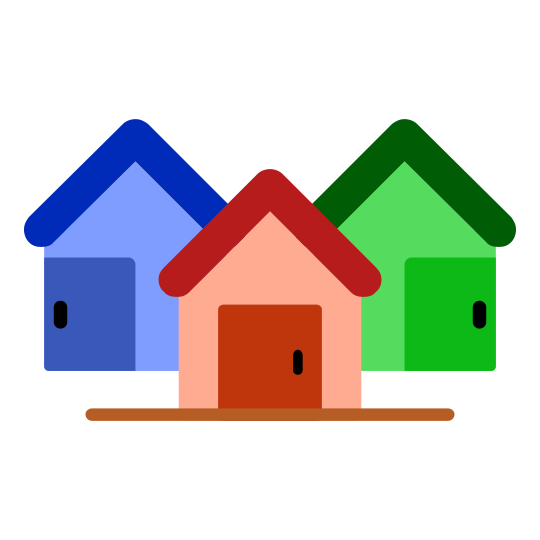
There are 4 houses in a row. In each house lives a person who plays a different sport, loves a different wild animal, and has a different tree out front. Use the clues to figure out who lives where.
Next daily puzzles in
00h 00m
Available at 00:00 AM your time
Don't want to wait? Play past Cluemojis in the archive.
Browse Past PuzzlesCluemojis
Cluemojis is a logic puzzle told in emoji, set across a row of houses that each have a color plus a handful of other attributes. Every item belongs to exactly one house, so placing something anywhere removes it from everywhere else. The clues carry the puzzle: a few hand you a placement outright, and the rest only mean something once you have combined two or three of them.
This is the Zebra Puzzle, the riddle usually credited to Einstein, made easier on the eye. A Zebra Puzzle sets up a new cast in prose each day and keeps everything in words. Cluemojis holds on to the row and the deduction, but gives every item an emoji, in the grid and in the clues, so you can spot what a clue is talking about at a glance instead of rereading names.
The size of the puzzle follows the difficulty. The easier levels use four houses and four attributes, the middle levels move up to five houses and five or six attributes, and the hardest ones keep five houses but stack on seven attributes. The attributes themselves change from puzzle to puzzle as well. Color is always one of them, and the rest are drawn from a wide pool: drinks, pets, jobs, trees, flowers, sports, hobbies, nationalities, instruments, vehicles, fruit, vegetables, breakfasts, desserts and more.
How to play
- Read the full clue list before placing anything.
- Give every house exactly one item from each attribute shown in the grid.
- Direct clues, like “The Teacher lives in the last house,” lock a placement in immediately.
- Positional wording matters. “Next to”, “beside” and “adjacent to” all mean the same thing, one house in either direction. “Somewhere to the left of” only gives you a direction, while “directly” or “immediately to the left of” pins the two houses together.
- “Somewhere between A and B, in that order” fixes the order as well as the gap, so it rules out both ends at once.
- The grid is complete when every emoji sits in exactly one house.
Tips
- Cross emojis out early and often, do not wait for a clue that places something. Most clues cannot place anything on their own, but almost all of them rule something out, and those crosses are what corner the answer. Take “The 🟥 Red house is somewhere to the left of the 👩🎨 Artist”: nothing gets assigned, but Red comes off the last house and the Artist off the first, right away.
- Keep those eliminations up to date as you go. Most stalls happen because a house was ruled out three clues ago and never crossed off.
- Neighbour clues bite hardest at the ends. “Next to” the first or last house can only point one way, so those are the relational clues worth reading before the ones about the middle houses.
- A clue linking two attributes, like a drink to a job, is useful even before you know the house. It travels with them as a pair and halves the work when either one gets placed. The harder levels lean on these, since the extra attributes give the clues more ways to connect.
Play more
The emoji are not decoration. Reading a Zebra Puzzle in words means holding a dozen names in your head at once, and swapping them for pictures gives you that capacity back to spend on the actual deduction. Six grids arrive daily across the whole range from very easy to ultra hard, and the hardest ones get there by stacking on attributes rather than simply piling up clues.
The Zebra family runs deep here. These are the ones worth trying next:
- Einstein Enigmas is the same emoji deduction rebuilt for a phone. Clues arrive one at a time and strike themselves out as your grid satisfies them, and none of them mention neighbours, which changes how a solve opens up.
- House Puzzles is the classic worded version. It holds at four attributes and stretches the row instead, up to eight houses, so the difficulty arrives as length rather than depth.
- Cluest keeps the deduction and drops the row. A grid of suspects, clues that count how many are innocent or guilty across a region, and a rule that you can only accuse someone the evidence already proves.
- Cardinal compresses the same idea into one line of face-down playing cards, with rank and suit to pin down separately for each of them.